
 Loading ...
Eastern aesthetics in fashion: silhouettes, fabrics and decorative elements
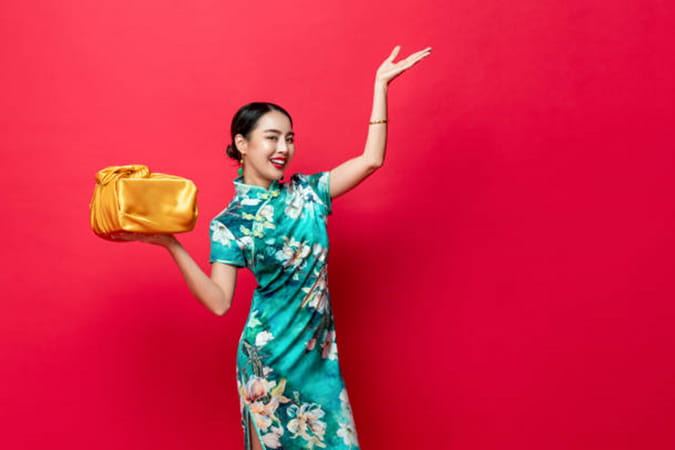
 Oriental motifs in clothing are recognizable not only by ornaments. They can be manifested in the cut, fabric work, collars, fasteners and proportions, and one of the most famous examples is ципаоAt the same time, Chinese, Japanese, and other Asian traditions shouldn't be mixed into one conventional style. It's much more interesting to see where a particular detail comes from and how it can be adapted to a modern wardrobe.
Eastern aesthetics does not have one silhouette
Clothing from different Asian countries was shaped by its own cultural environment, and therefore works with form differently. A Chinese costume may emphasize the vertical and line of the figure, while Japanese traditional clothing is often built on straight details and a looser volume.
Chinese line and clear cut
The modern qipao originated in China in the first half of the 20th century. The China National Silk Museum notes that the dress originated in the late Qing Dynasty, developed in Shanghai, and became especially popular in the 1920s and 1940s. It is characterized by a one-piece silhouette, a high collar, side slits, and decorative clasps.
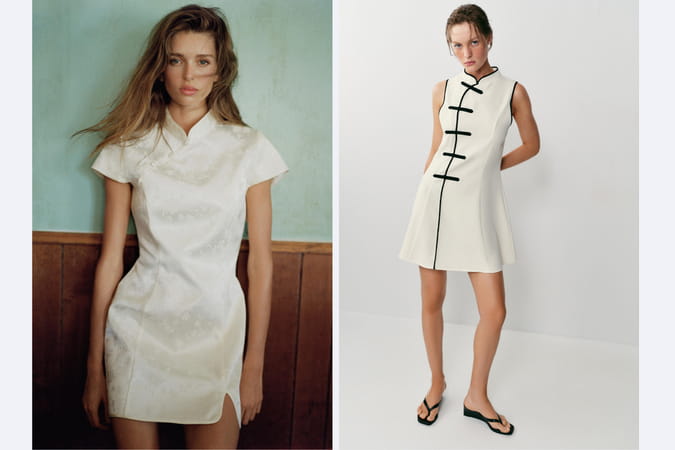
Today, it's not necessary to recreate this look literally. A high collar or an asymmetrical clasp can appear on a jacket, top, or simple dress.
Japanese freedom of form
The kimono works differently. The V&A describes it as a straight-cut garment that is folded and secured with an obi belt. It is its simple construction and wide planes of fabric that have made it an important source of inspiration for modern designers.
In everyday fashion, this principle is easily recognized in spacious jackets, wrap cardigans, wide sleeves, and belts that shape a silhouette without a rigid cut.
Watch a very interesting video about modern fashion trends in 2026:
Fabric makes half the impression
Eastern aesthetics are strongly associated with textiles. In museum collections, Chinese cheongsams from the 1930s are presented in silk, particularly with metallic threads. Japanese costume also has a rich tradition of working with silk, dyeing, and complex fabric surfaces.
In a modern wardrobe, this mood can be conveyed through satin, jacquard, smooth silk or fabrics with a delicate sheen. It is not the high decorativeness itself that is important, but the way the material moves, reflects light and holds its shape.
The decor is worth reading more carefully.
Flowers, birds or geometric motifs in traditional clothing often had cultural significance, rather than serving as a random print. The V&A notes that Chinese silk embroidery uses floral, animal, figurative and abstract motifs, while in Japanese kimonos the ornamentation could be related to the season, an event or the qualities of the wearer.
For modern styling, one expressive element is enough:
- jacket with an asymmetrical fastener;
- dresses with high collars;
- wide kimono-style sleeves;
- silk top with delicate embroidery;
- bags or shoes with an ornamental accent.
When there are few such details, the image looks more modern and does not turn into theatrical stylization.
How to wear oriental motifs today
The easiest way is to pair one statement piece with a neutral base. A wide-sleeved jacket can be worn with straight-leg pants, a satin dress with a high collar with simple shoes, and a decorative top with plain denim.
It’s also important not to call any floral print or silk dress “Oriental.” When the origin of a silhouette or detail is clear, the look looks thoughtful, and the cultural motifs aren’t reduced to a set of stereotypes.
Details are more important than literal copying
Modern fashion is constantly reinterpreting historical clothing, but the most interesting looks don't copy it completely. They take a separate principle - a straight cut, a flare, a high collar, a silk texture or a characteristic clasp - and transfer it to a current wardrobe. This way, the oriental aesthetic remains recognizable, but looks natural in modern clothes.
See more interesting and useful information on the portal: